
ADHD ASSESSMENTS
ADHD assessments for kids in Perth
Homework takes hours. Shoes, bags and drink bottles disappear daily. Teachers have noticed too, and you're wondering whether it's ADHD and who can actually tell you.
This page explains who assesses ADHD in Western Australia, where to find providers, and what to do while you wait.
AT A GLANCE
Where to start
Your GP is a good first stop to rule out other causes and talk through options.
Paediatricians and child psychiatrists generally diagnose ADHD in WA and can start medication.
Psychologists can assess for ADHD. They can't prescribe medication.
Who can assess ADHD
There's more than one way in. The right one depends on your child's age, your budget and whether medication is something you'd like to talk about.
NO MEDICATION
Psychologists
Psychologists can assess for ADHD and learning profiles. Usually no referral is needed, though a referral may open Medicare rebates. They can't prescribe medication.
See child psychologists
DIAGNOSIS AND MEDICATION
Paediatricians and psychiatrists
Paediatricians and child psychiatrists generally diagnose ADHD in WA and can start medication. A GP referral is needed, and waitlists can be long.
See who's accepting referrals
KIDS 10 AND OVER
Specially trained GPs
Some WA GPs can now assess and diagnose ADHD in low risk patients aged 10 and over. Only about half are listed publicly, and most are likely full.
Read the GP guide
Listings are not endorsements. Check fees, wait times and referral requirements with each provider.
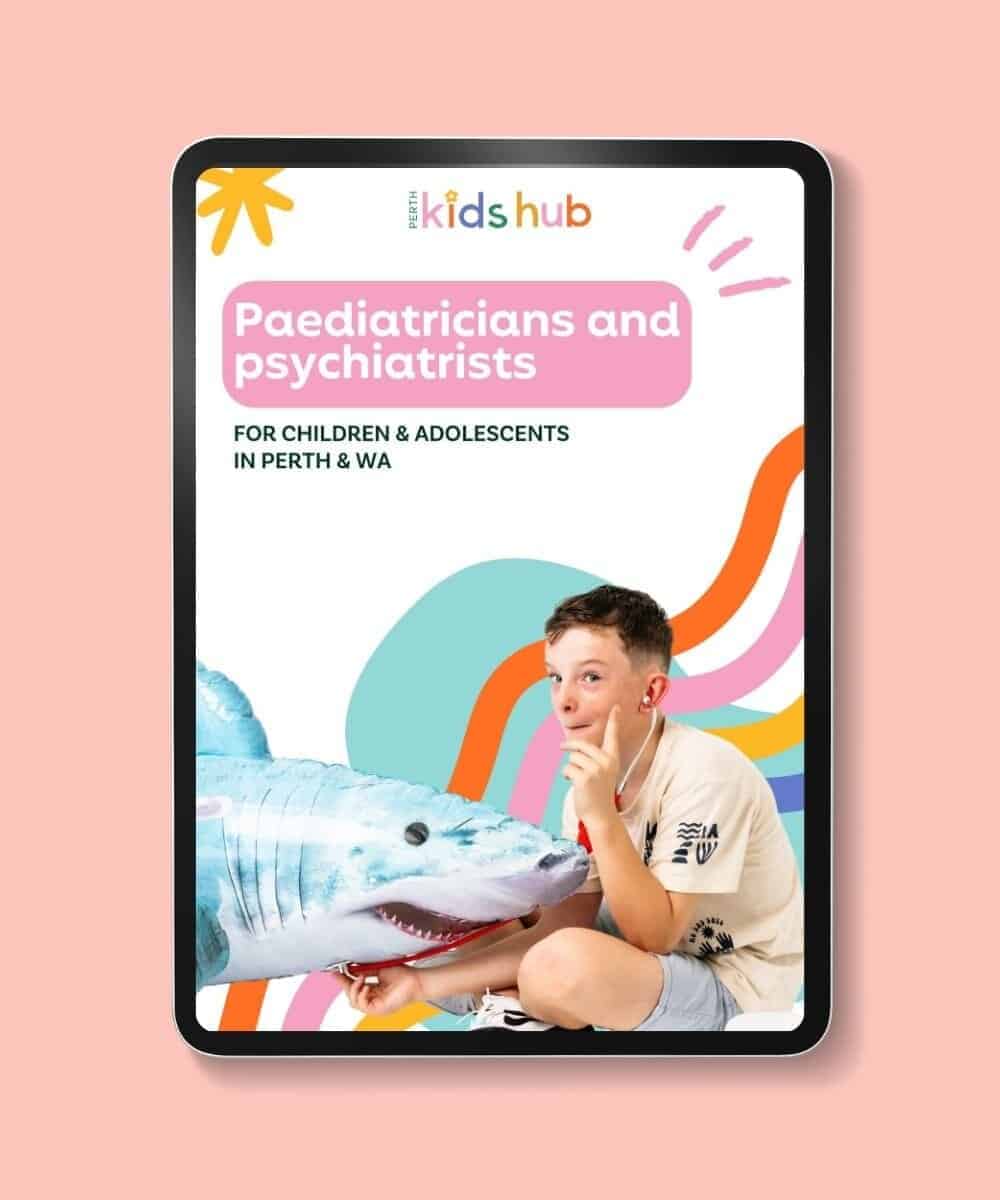
FREE DOWNLOAD
Perth paediatrician and psychiatrist guide
A complete list of Perth and WA paediatricians and child and adolescent psychiatrists. Last updated February 2026. No sign-up needed, so you can download it straight away or read it online.
What an ADHD assessment looks at
There's no single test for ADHD. A clinician builds the picture from your child's history, questionnaires completed at home and at school, and time spent with your child.
Teacher observations carry real weight, even though a school can't diagnose ADHD. It helps to ask the classroom teacher what they see before your first appointment.
Inattentive ADHD is common and is often missed, especially in girls. A good assessment looks at the whole child, not just the loudest behaviour.
Signs you might notice
Lots of kids do these things sometimes. They're a starting point for a conversation, not a checklist.
Starting and finishing
Trouble starting or finishing tasks.
Repeatedly losing belongings.
Focus and memory
Easily distracted.
Forgetting instructions soon after hearing them.
Energy and feelings
Constant fidgeting, talking or moving.
Big emotional reactions that pass quickly.
The key question is whether these happen more often, more intensely and in more settings than for other kids the same age. Only an assessment can answer that.
How assessment works in Perth
Your GP can rule out other causes first, such as iron or thyroid issues, sleep, hearing or vision, and talk through options and costs.
Developmental paediatrician waitlists are long. The paediatrician and psychiatrist guide and availability list are updated regularly, so you can see who has space.
The WA Child Development Service is free, but waitlists are long too. Many families join a waitlist and start private support at the same time.
Costs vary between providers. Ask for a full breakdown, including report fees, before you book.
Here's what to do next
1. Book a GP appointment to rule out other causes and ask about referrals.
2. Ask your child's teacher what they notice and what supports are already in place.
3. Choose a starting point: a psychologist, a paediatrician or psychiatrist, or a trained GP. Ask who's accepting referrals.
4. Start support early. OTs, speech pathologists and others can often start without a diagnosis.
Other assessments you might be looking for
ADHD often overlaps with learning differences and autism. Sometimes the questions about a child lead to questions about a parent too.
Learning assessments
Dyslexia, dysgraphia and dyscalculia, usually assessed by a psychologist.
See learning assessments
Autism assessments
Pathways and providers for autism assessments for children in Perth.
See autism assessments
Adult assessments
For parents who are wondering about their own ADHD or autism.
See adult assessments
Common questions from Perth parents
Do I need a referral for an ADHD assessment?
It depends on who you see. Paediatricians and psychiatrists need a GP referral. Psychologists usually don't, though a referral may open Medicare rebates.
Can a psychologist diagnose ADHD?
Psychologists can assess for ADHD, but they can't prescribe medication. If medication is on the table, you'll need a paediatrician, psychiatrist or approved GP.
Can a girl have ADHD without hyperactivity?
Yes. Inattentive ADHD is common and is often missed in girls, who may be quiet, dreamy or working very hard to keep up.
How much does an assessment cost?
It varies a lot. Ask each provider for a full breakdown, including report fees and any follow-up appointments.
Can the school diagnose ADHD?
No, but teacher observations are useful to a clinician. Ask the teacher to write down what they see.
What about medication?
That's a decision made with a specialist. Some families choose medication, and some use therapy and school supports only.
Need a hand finding the right person?
Browse providers accepting referrals, or download the paediatrician guide first. If you're still stuck, email hello@perthkidshub.com.au.
This page is general information only and is not medical advice. Perth Kids Hub is a directory, not a clinic.